
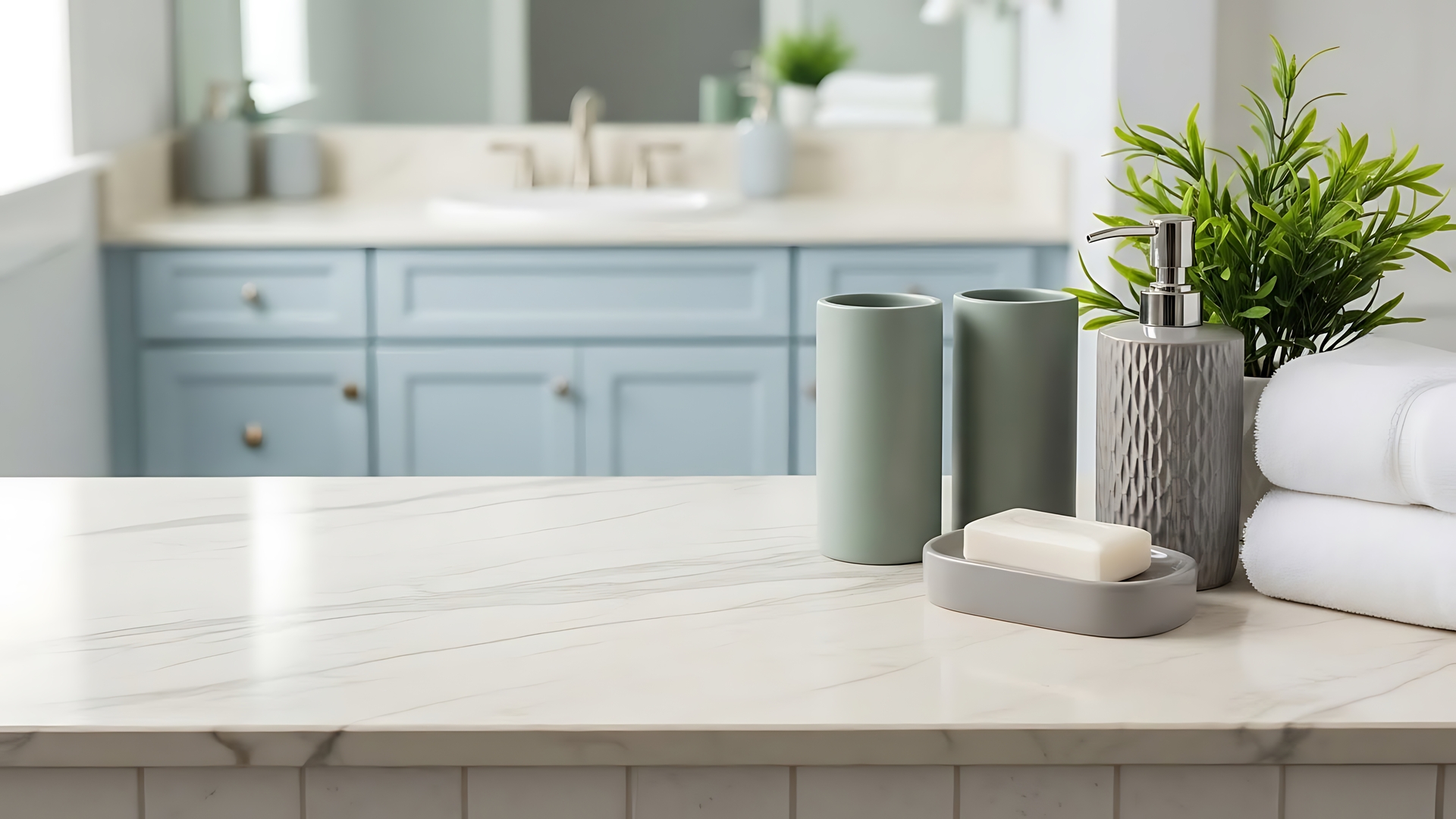
When planning a kitchen or bathroom remodel, most homeowners focus on countertop material and color. Quartz versus natural stone. Light tones versus dark. Matte versus polished. One detail that often gets pushed aside until the very end is the edge profile—and that’s where regret tends to creep in later.
Countertop edge profiles quietly shape how a surface looks, feels, and even functions over time. An edge can make a slab appear thicker, softer, more modern, or more traditional. It also affects comfort, durability, and how forgiving the countertop is in a busy household. Overlooking this decision can lead to a finished space that feels slightly “off,” even if everything else is done right.
The role edge profiles play in everyday use
Countertop edges are not just decorative. They influence how a countertop interacts with daily life. Sharp edges may look sleek but can be uncomfortable to lean against. Rounded edges feel softer but may not match a contemporary design. Some profiles hide wear better, while others highlight every chip or ding.
Edge profiles also affect visual weight. A subtle bevel can make a countertop look thinner and more refined, while a deeper profile can add presence and structure. These differences are easy to overlook in a showroom but become very noticeable once installed throughout a full kitchen or bathroom.
Homeowners comparing surface options often focus on slabs alone, but understanding how different countertop materials respond to edge profiles helps avoid choices that look good initially but disappoint over time.
Eased edges that feel too plain after installation
Eased edges are one of the most commonly chosen profiles because they feel safe and neutral. They feature a slightly softened square edge that works in almost any space. However, many homeowners later feel this choice was too minimal, especially in kitchens where the countertop is meant to stand out.
In larger kitchens or open layouts, eased edges can fade into the background. The countertop may look flat or unfinished, particularly when paired with thicker slabs or statement cabinetry. While eased edges work well for ultra-modern designs, they can feel underwhelming in transitional or custom-focused spaces where detail matters.
Beveled edges that age faster than expected
Beveled edges introduce an angled cut along the top edge of the countertop, adding a crisp line that reflects light beautifully when new. The problem is that bevels tend to show wear more quickly than homeowners expect.
The angled surface catches crumbs, moisture, and cleaning residue. Over time, it can dull unevenly or highlight minor chips. In high-use kitchens, beveled edges may require more maintenance to keep looking sharp. What once felt refined can begin to feel dated or fussy if upkeep is not considered early on.
Bullnose profiles that soften more than intended
Bullnose edges are fully rounded, creating a smooth, continuous curve. They are often chosen for safety, especially in family homes. While comfortable and forgiving, bullnose edges can dramatically soften the overall look of a countertop.
In modern kitchens, a full bullnose can feel overly traditional. It reduces visual definition between the countertop surface and cabinetry below. Many homeowners later wish they had chosen a half bullnose or a smaller radius that balanced comfort with cleaner lines.
Mitered edges that require careful planning
Mitered edges create the illusion of a thicker countertop by joining two pieces at an angle. When done correctly, they add drama and visual weight. When chosen without enough planning, they can feel heavy or out of scale.
A thick mitered edge in a compact kitchen can overwhelm the space. It may also highlight seams if fabrication tolerances are not precise. These concerns often come up during kitchen remodeling projects where layout, cabinetry depth, and island proportions must work together to support the edge profile choice.
Ogee edges that clash with modern layouts
Ogee profiles feature decorative curves and layered detailing. They are beautiful in traditional or classic kitchens but often clash with contemporary layouts. Many homeowners select ogee edges because they look impressive in isolation, without considering the overall design language of the home.
In open-concept spaces or modern remodels, ogee edges can feel out of place. The profile may compete with clean cabinetry, modern fixtures, or minimalist backsplashes. Regret often sets in when the edge becomes the most visually dated element in an otherwise updated space.
Small details that shape long-term satisfaction
Edge profiles may feel like a minor decision compared to cabinetry or flooring, but they play a daily role in how a space feels and functions. A well-chosen edge quietly supports the design. A rushed choice becomes a constant reminder of what could have been done differently.
Taking time to consider comfort, maintenance, scale, and style alignment leads to better outcomes. The right edge profile does not call attention to itself—it simply feels right, year after year.
Call to schedule a countertop design consultation in Orange County, CA
At Apex KBF, we help homeowners navigate the details that make a real difference, from countertop materials to edge profiles that suit the way a home is used. For expert guidance and thoughtful design support across Orange County, connect with our team through the Contact Us page and start planning a remodel that feels intentional down to the smallest detail.